


Co-authored with Dr. Sean Olive.
You’ve probably seen distortion measurements, those percentage numbers that tell you how “clean” headphones sound, in headphone reviews. But do those numbers actually matter? Can you actually hear the artifacts that show up in our lab tests? In our earlier literature review, we researched what we knew and what we were missing about distortion measurements. Two big gaps stood out: we didn’t have clear thresholds for when distortion becomes audible, and even when it’s audible, we didn’t know if it actually affects which headphones you’d prefer. As a result, we partnered with Dr. Sean Olive to find out by conducting comprehensive listening tests using real headphone recordings.
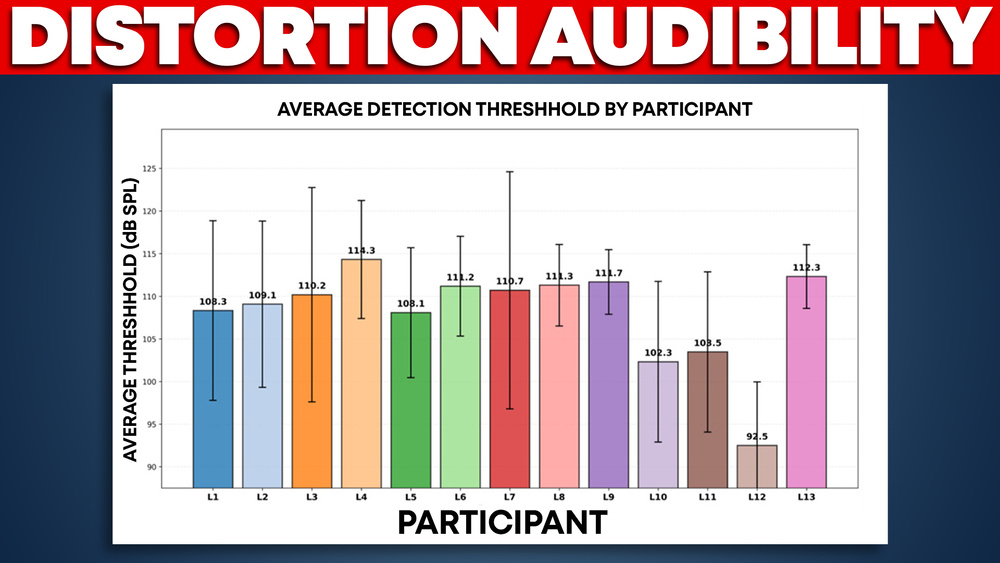
For the headphones we tested, distortion is largely inaudible at normal listening levels. Our detection threshold tests revealed that distortion only becomes audible at 104–112 dB SPL, which are levels that would be uncomfortable or even harmful for extended listening. When comparing recordings made at our standardized 94 dB SPL level, some listeners could rate subtle differences between recordings in similarity tests, but when put to the test in ABX discrimination (the gold standard for proving you can actually hear something), almost everybody failed. Only one listener out of many could distinguish between the headphones above chance. These recordings are genuinely difficult to decipher, which tells us something important: even when differences exist, they’re extremely subtle. Therefore, when it comes to practical listening, distortion measurements aren’t something you need to lose sleep over.